Our research in NeuroAI is organized around three overarching scientific questions that investigate the bidirectional coupling of Architecture ↔ Dynamics ↔ Computation across biological brains and brain-like artificial systems, supported by our open-source simulation and training ecosystem.
Conceptual illustration
Research question 01
How do biological connectomes and circuit rules shape spatiotemporal dynamics to organize cortical computation?
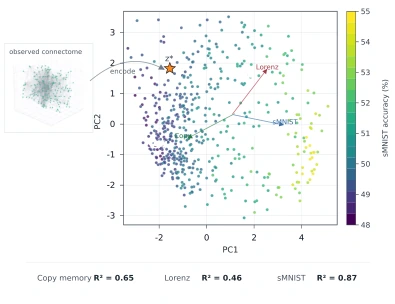
Cortical circuits are sparse, heterogeneous graphs rather than uniform layers. Combining data-driven primary visual cortex models, generative latent connectome representations, and spatial spectral theory, we reveal how local excitation-inhibition rules, cellular diversity, and anatomical motifs sculpt traveling waves, input-slaved transients, and flexible condition-dependent spike-order codes that drive robust sensory processing and working memory.
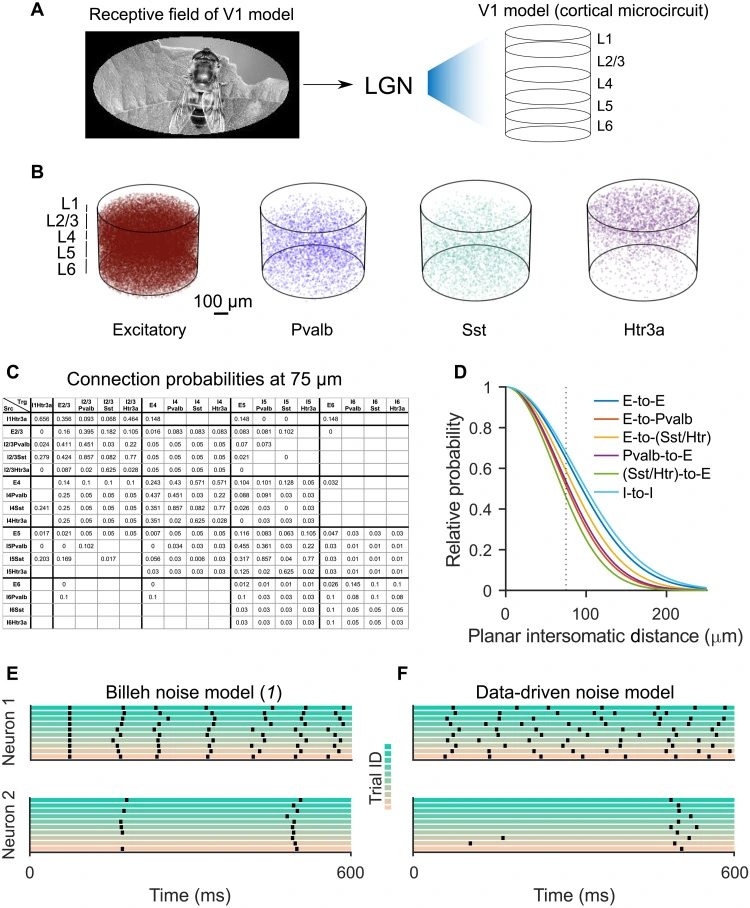
A comprehensive data-based model of primary visual cortex achieves versatile, noise-robust visual processing with sparse, energy-efficient neural coding.
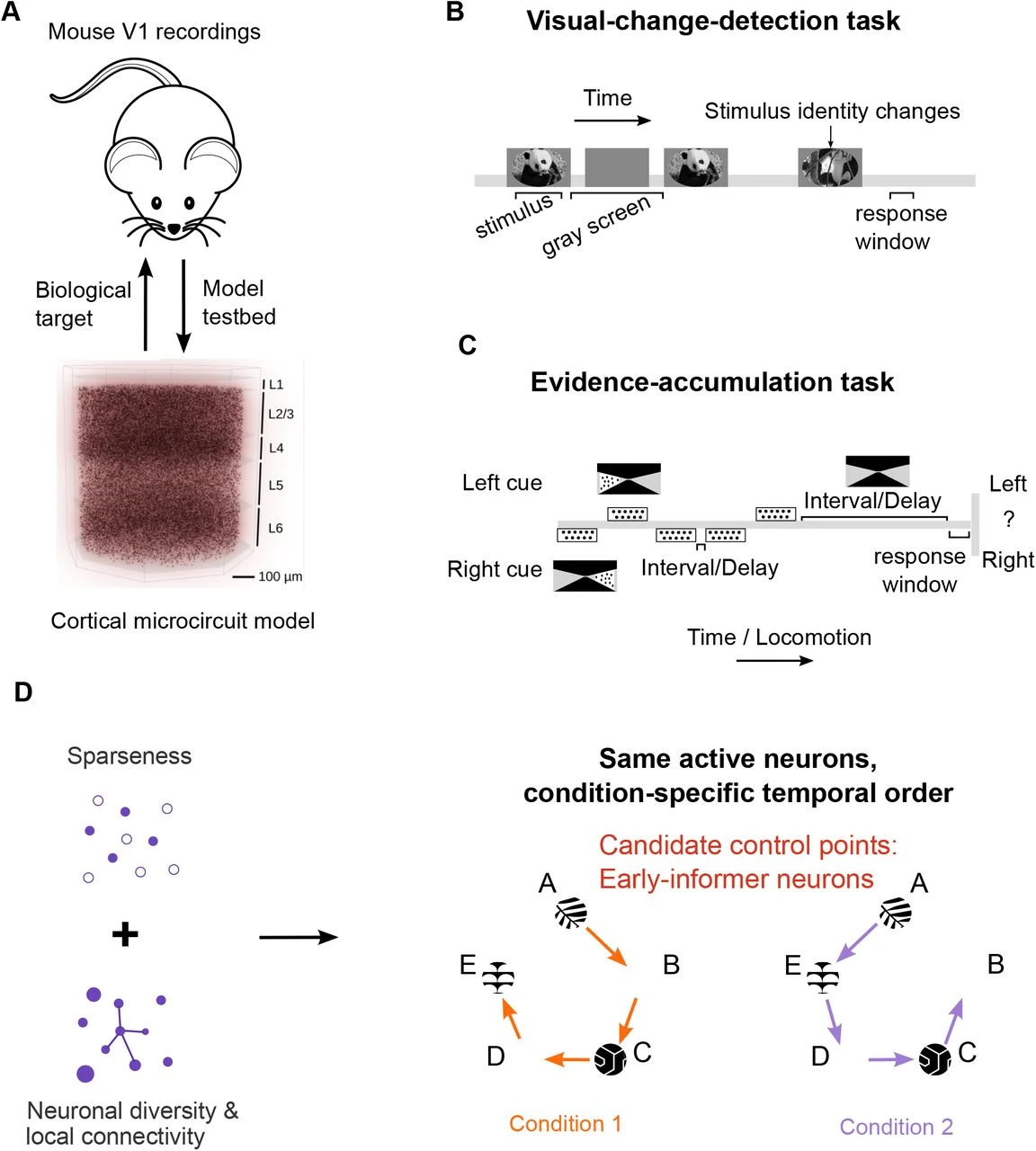
Combining mouse visual cortex recordings with a data-driven microcircuit model reveals how local connectivity and heterogeneity support flexible spike-order codes.
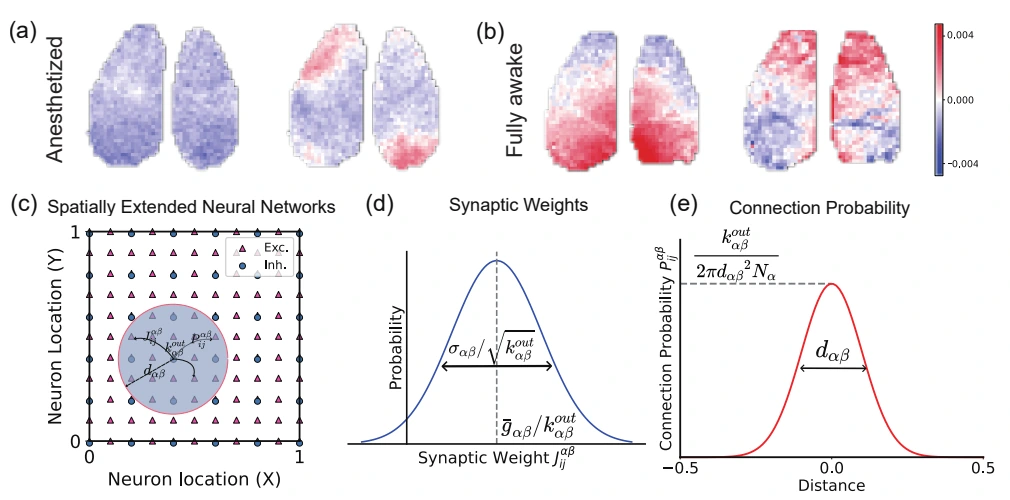
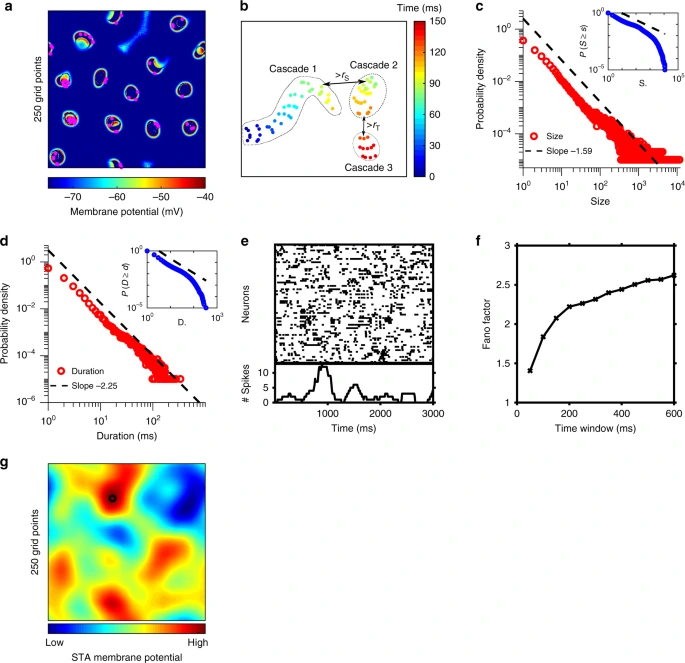
Spectral theory links microscopic excitation-inhibition connectivity rules to eigenvalue signatures that predict macroscopic cortical waves, oscillations, and chaos.
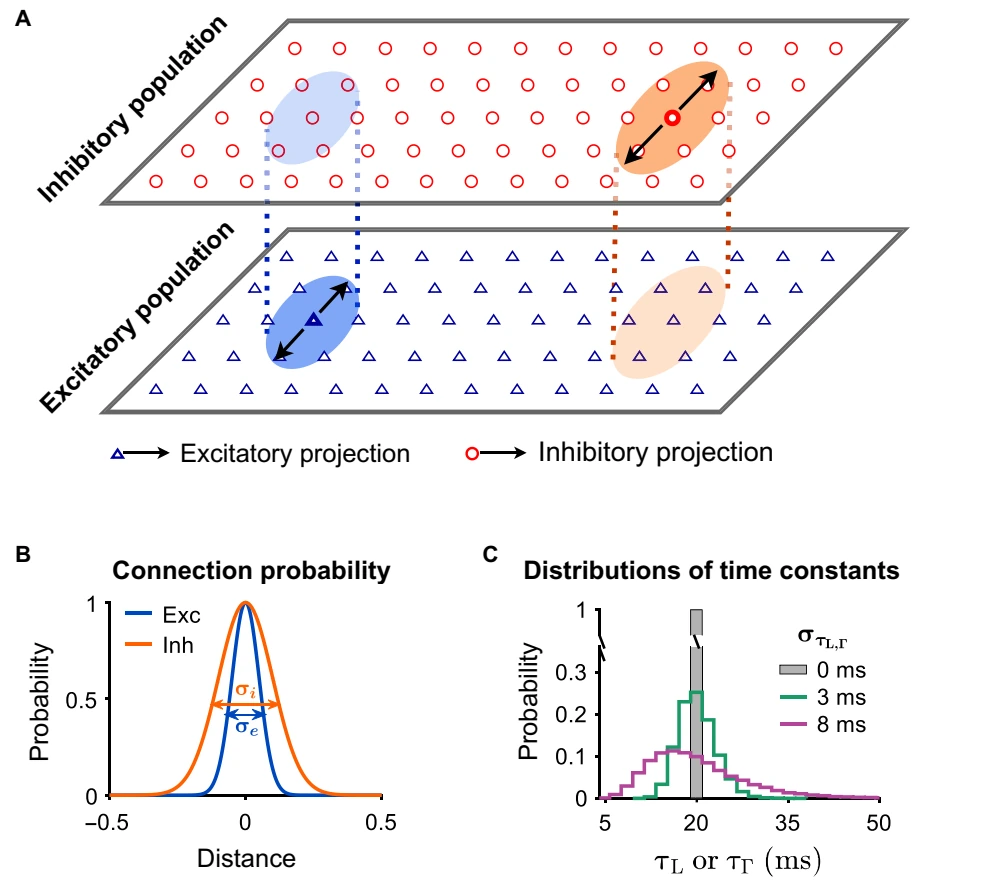
Cellular and synaptic heterogeneity disrupts intrinsic coherent waves to produce locally sensitive, globally input-slaved transient dynamics for reliable coding.
How do non-equilibrium dynamics, criticality, and biological plasticity drive efficient learning and adaptive coding?
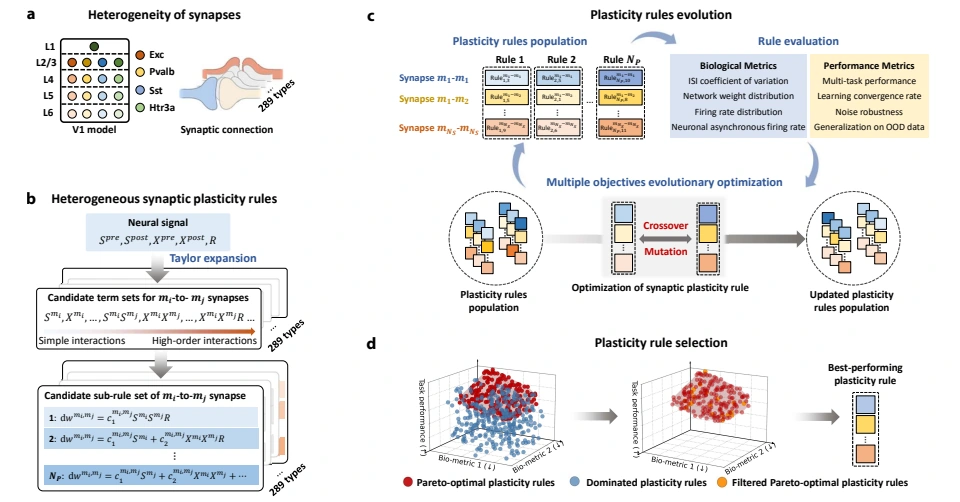
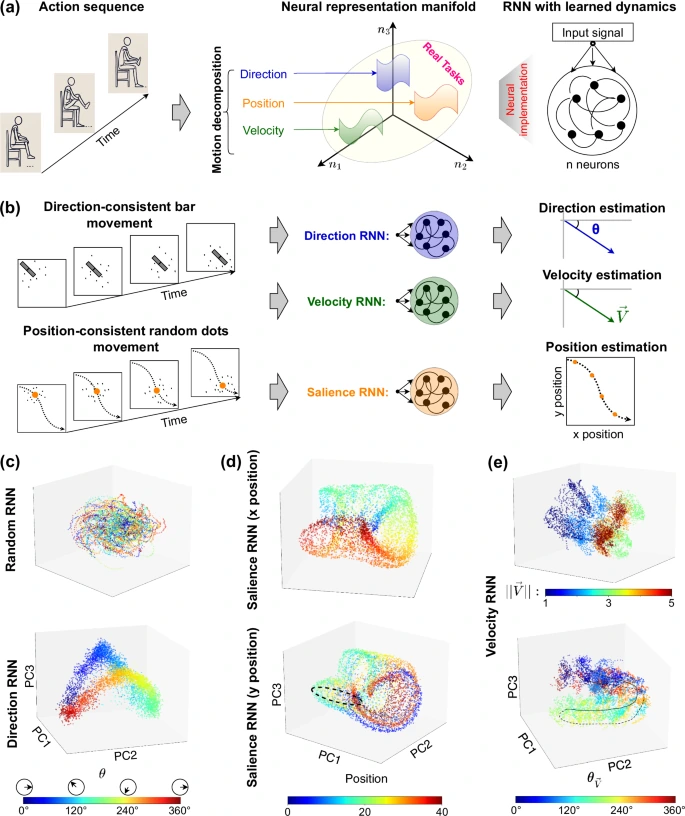
Biological networks compute and learn far from equilibrium. We show how modulating ongoing spontaneous activity accelerates active perception, how critical transition states generate superdiffusive attention spotlights and enable strictly local online rules to achieve global credit assignment, and how evolved heterogeneous plasticity and continuous attractor manifolds support rapid, few-shot adaptation.
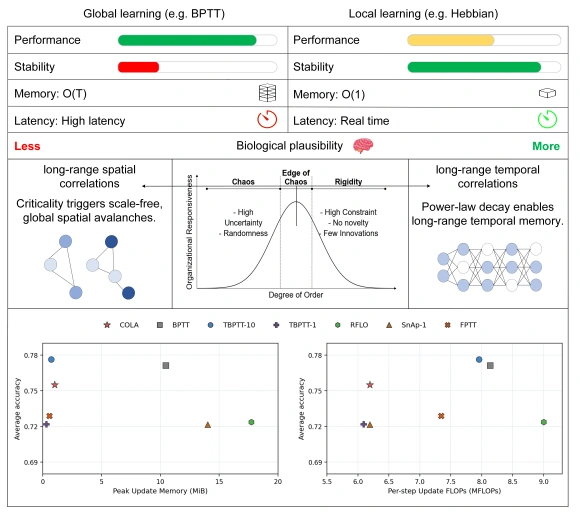
Criticality-driven Online Local Alignment exploits long-range critical correlations so local recurrent updates approximate global backpropagation in constant activation memory.
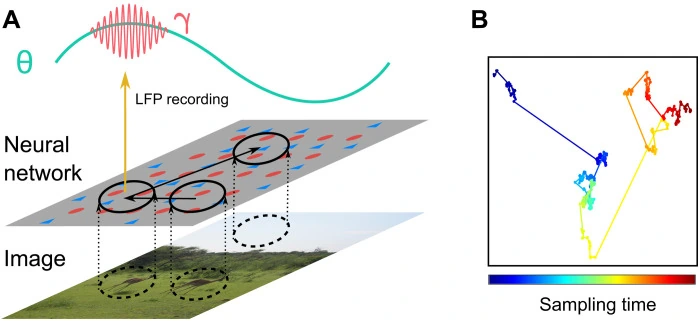
Near dynamical state transitions, cortical circuit models generate a wandering attention spotlight with theta oscillations and superdiffusive spatial sampling.
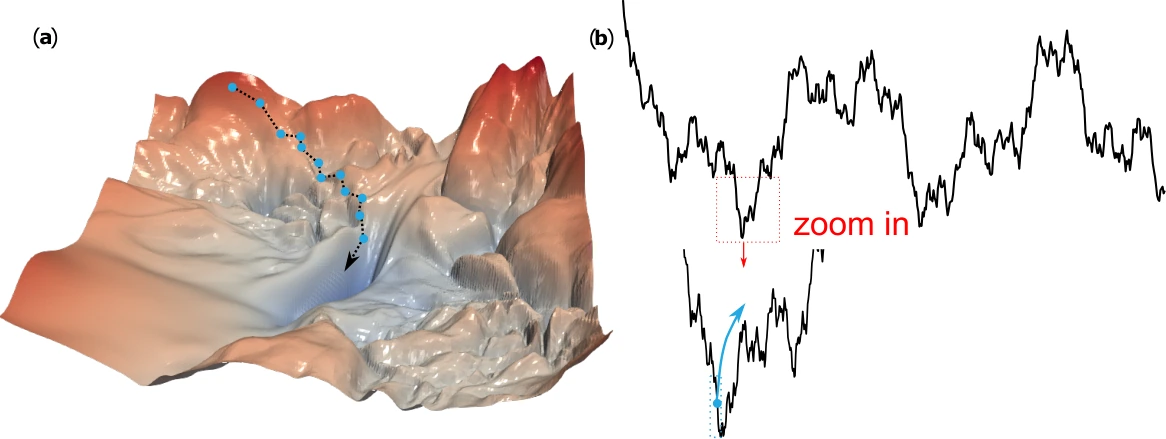
Stochastic gradient descent navigates fractal-like deep network loss landscapes through anomalous superdiffusion, enabling escape from sharp local minima.
How can brain-inspired structural priors and asynchronous spike dynamics power scalable AI and embodied intelligence?
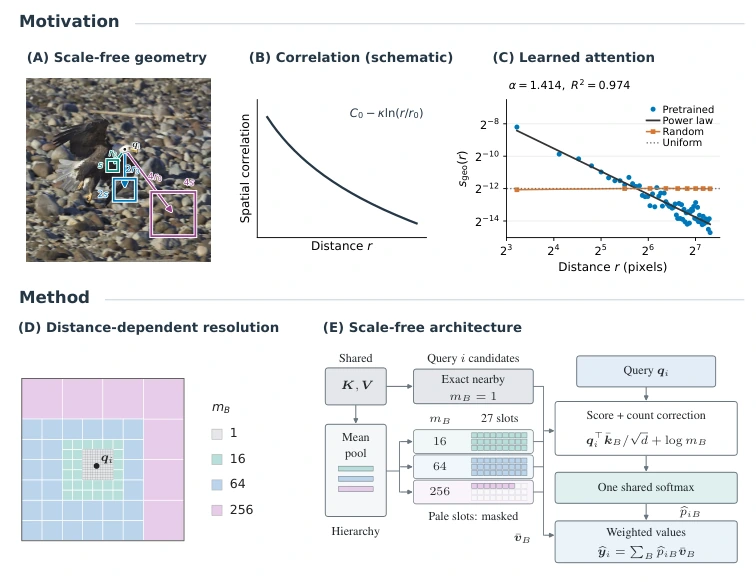
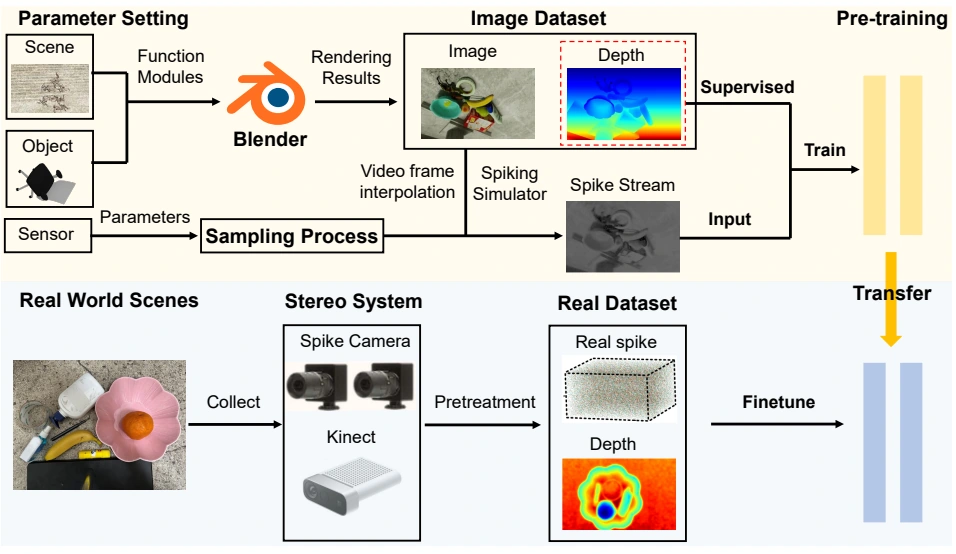
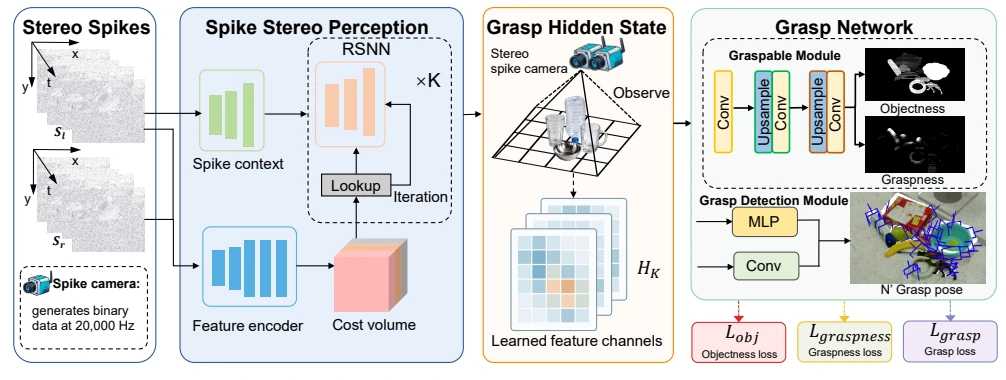
Translating neurophysical principles into machine learning yields architectures that learn from less data and compute with high efficiency. By embedding scale-free spatial hierarchies, hippocampal multiscale positional codes, spectral state-space priors, and recurrent spiking dynamics into modern models, we advance high-resolution diffusion generation, sequence modeling, microsecond stereo depth estimation, and point-cloud-free robotic grasping.
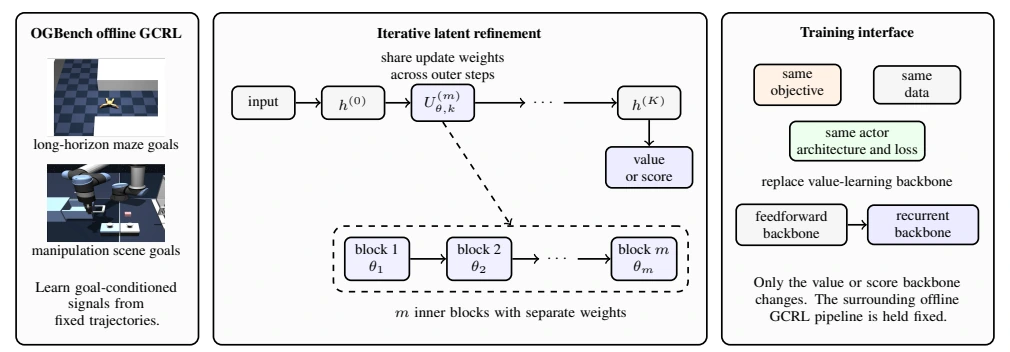
We study iterative latent refinement as an architectural replacement for the feedforward value or critic backbone used by existing offline GCRL algorithms.
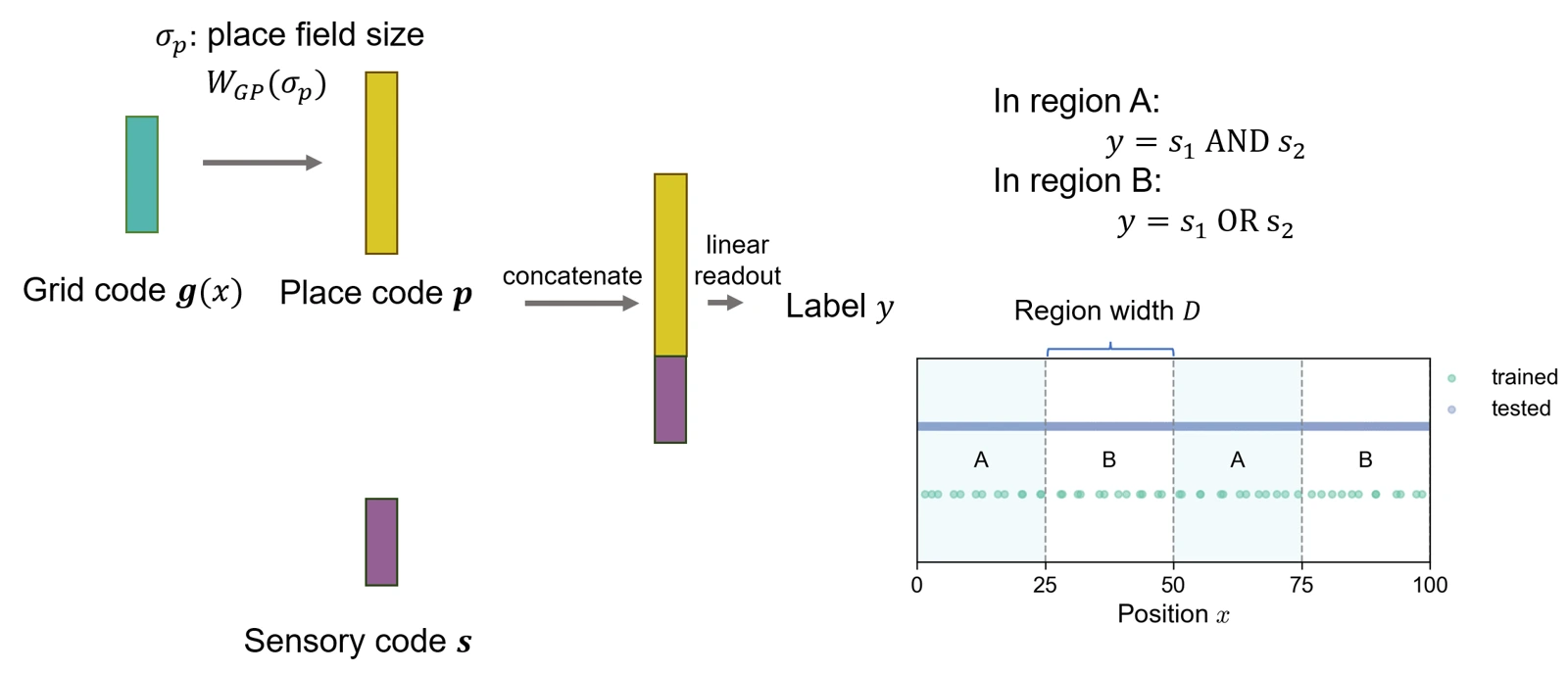
Modeling how grid cell projections generate multiscale hippocampal place fields inspires a Transformer positional embedding that improves sample efficiency.
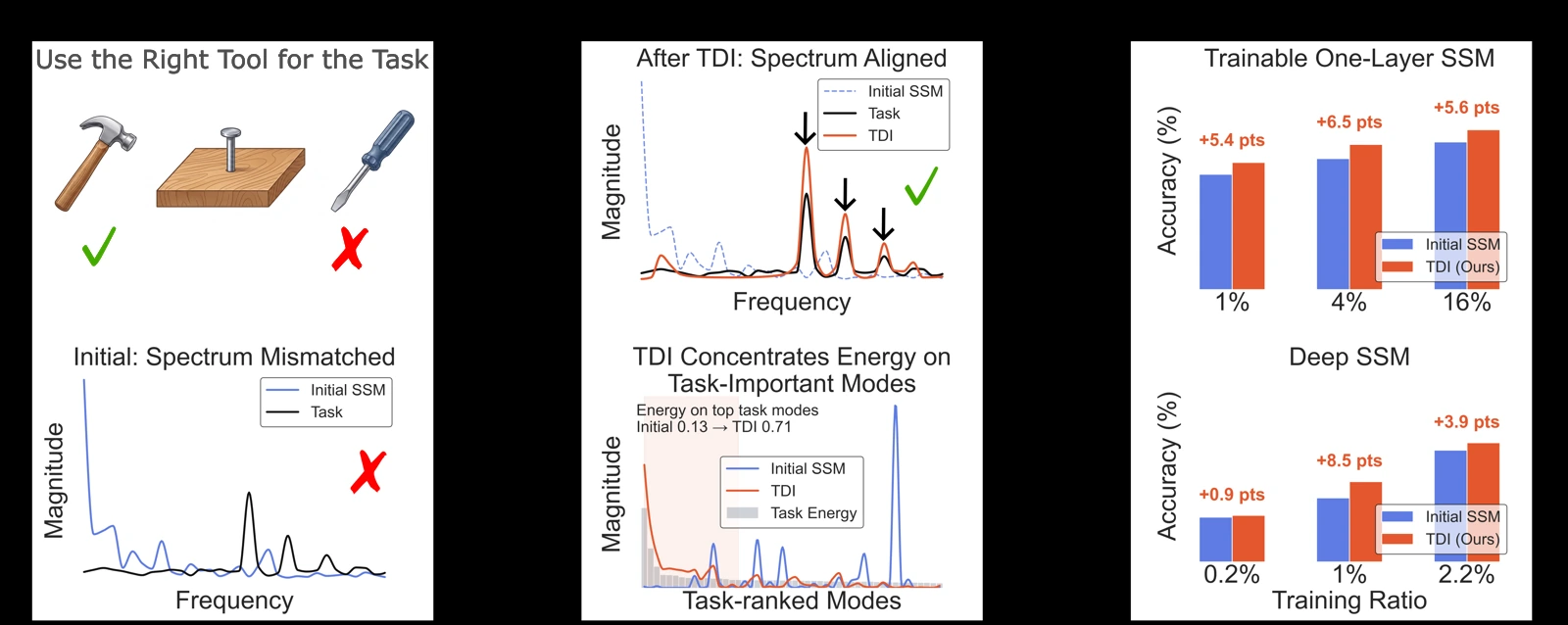
Formalizing state space model inductive bias through kernel frequency response enables task-dependent spectral initialization for data-efficient sequence generalization.
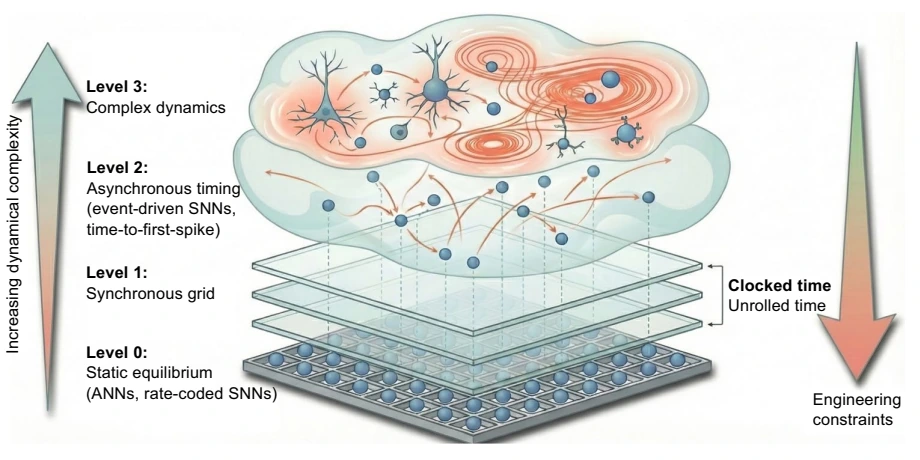
This perspective introduces dynamical superspace, a theoretical framework organizing spiking neural networks by temporal density and non-equilibrium state-space complexity.