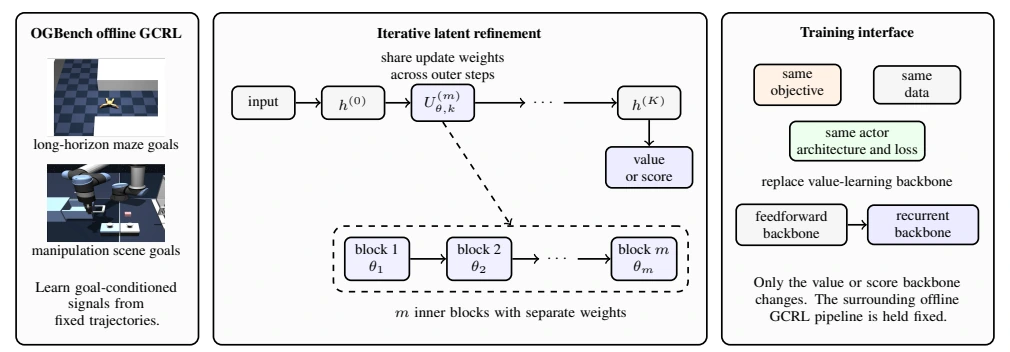
Iterative Latent Refinement for Value Learning in Offline Goal-Conditioned RL
We study iterative latent refinement as an architectural replacement for the feedforward value or critic backbone used by existing offline GCRL algorithms.
The research record
Published work, preprints and the resources behind them. Each research story introduces the scientific question and connects it to our wider research.
Google Scholar ↗26 publications
We study iterative latent refinement as an architectural replacement for the feedforward value or critic backbone used by existing offline GCRL algorithms.
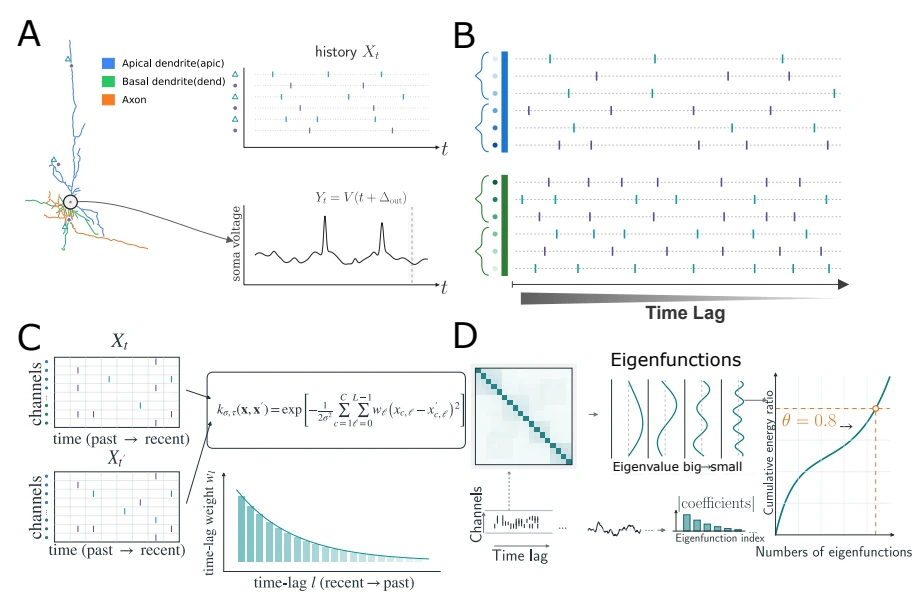
The Spectral Complexity Index provides an interpretable, white-box kernel measure of single-neuron input-output computation at a fraction of surrogate-model cost.
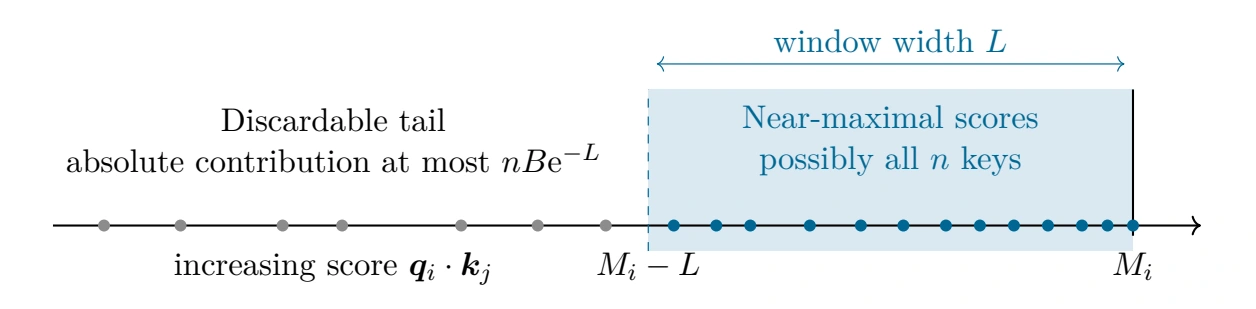
An algorithmic complexity analysis establishes faster subquadratic softmax attention bounds in fixed dimensions across arbitrary positive temperatures, matching maximum-inner-product limits.
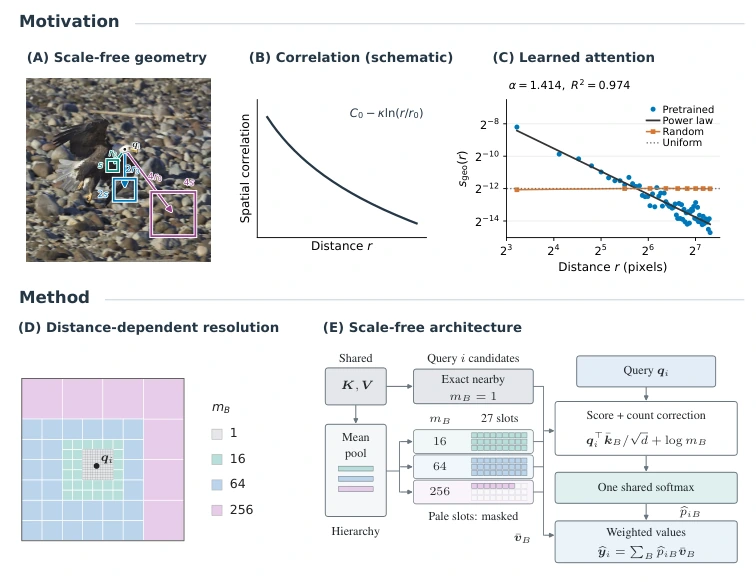
Scale-Free Attention uses a statistical physics-inspired spatial hierarchy to accelerate high-resolution diffusion transformers while improving image generation quality.
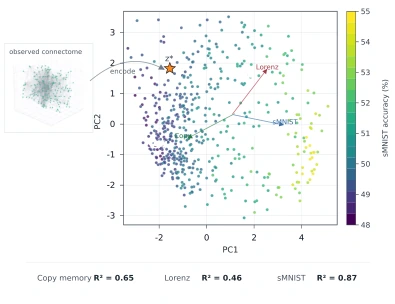
A conditional generative latent model compresses sparse connectomes to link synaptic graph motifs directly with reservoir computing capacities.
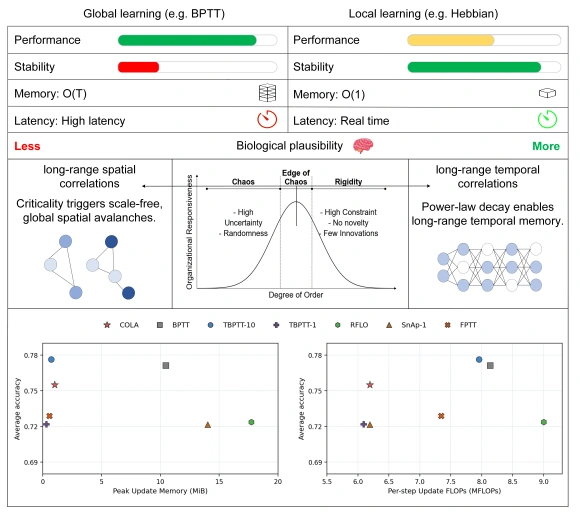
Criticality-driven Online Local Alignment exploits long-range critical correlations so local recurrent updates approximate global backpropagation in constant activation memory.
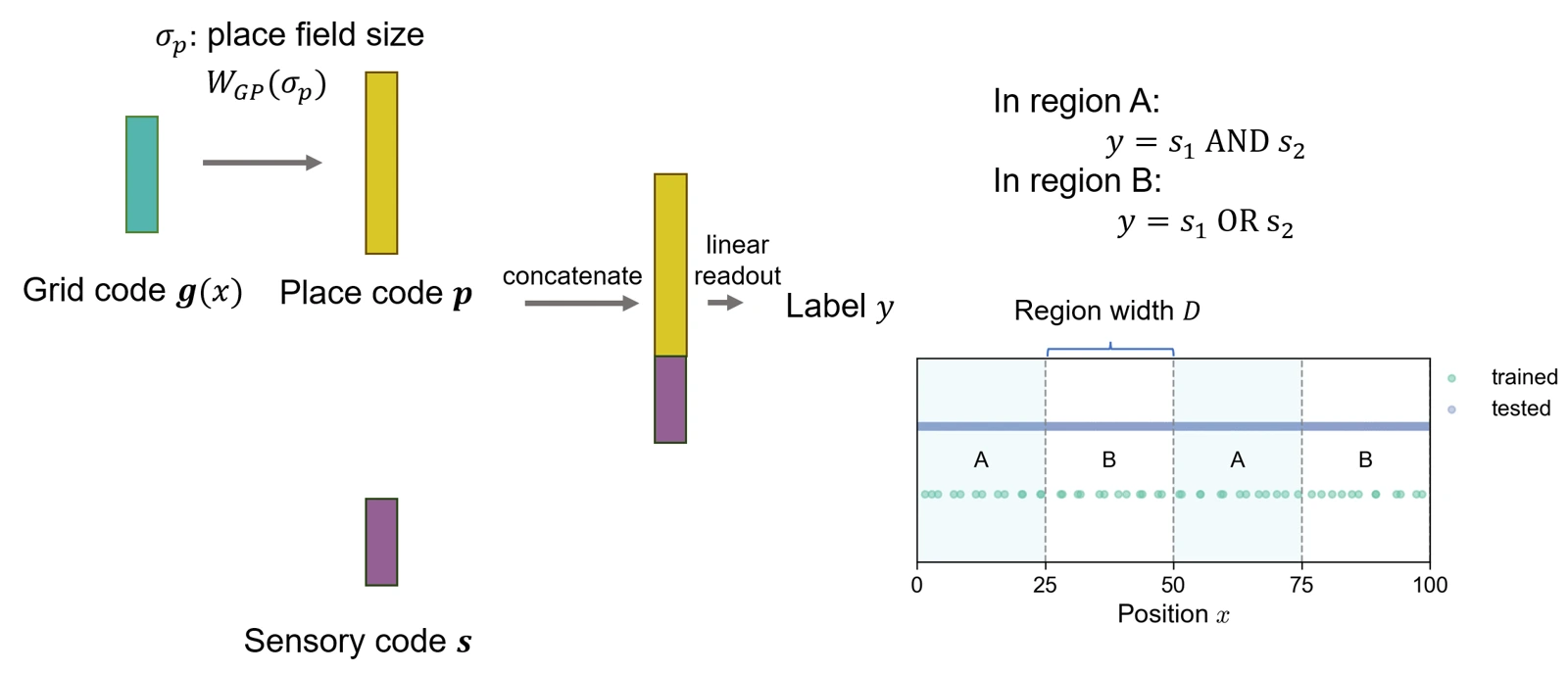
Modeling how grid cell projections generate multiscale hippocampal place fields inspires a Transformer positional embedding that improves sample efficiency.
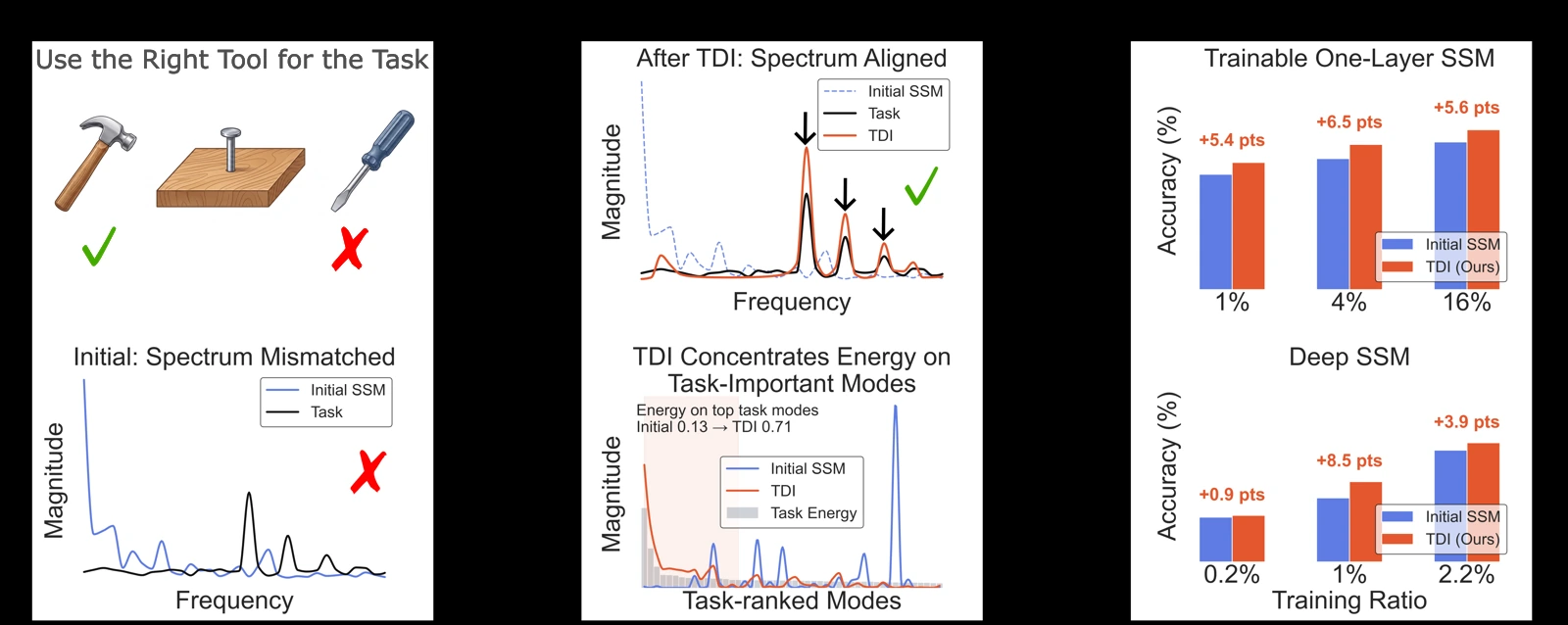
Formalizing state space model inductive bias through kernel frequency response enables task-dependent spectral initialization for data-efficient sequence generalization.
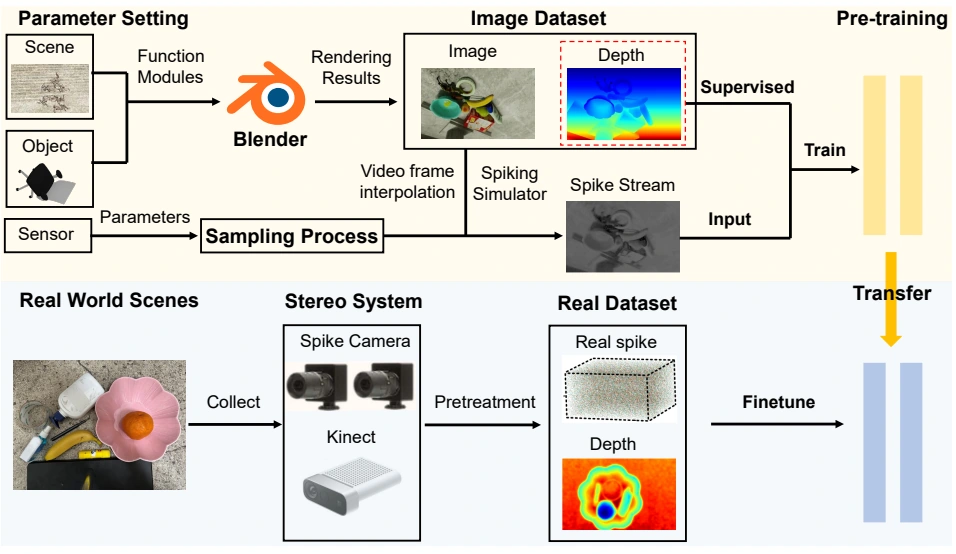
SpikeStereoNet estimates dense stereo depth directly from microsecond spike camera streams using iterative recurrent spiking neural network refinement.
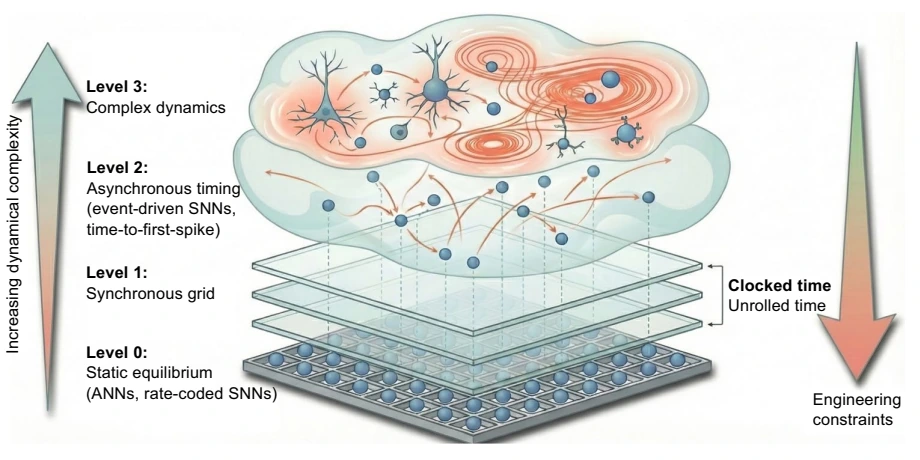
This perspective introduces dynamical superspace, a theoretical framework organizing spiking neural networks by temporal density and non-equilibrium state-space complexity.
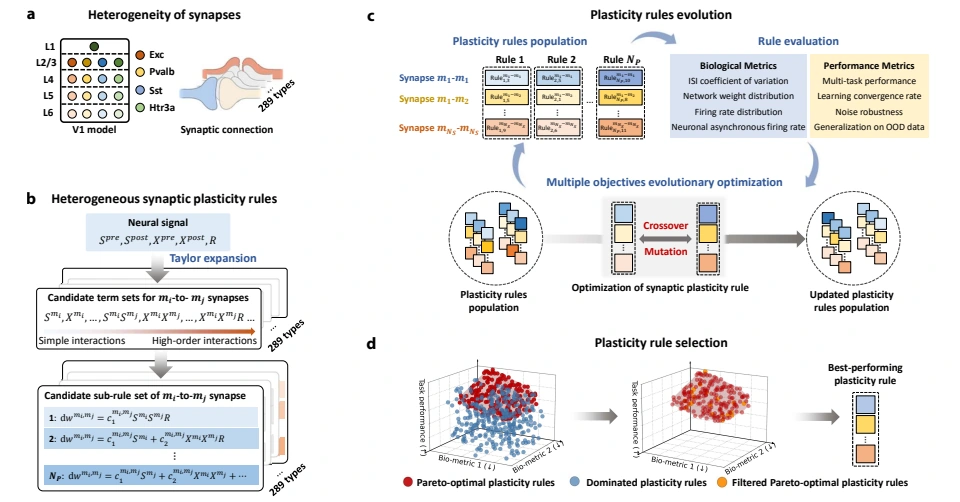
Large-scale multi-objective evolution in a realistic mouse visual cortex model uncovers biologically plausible, heterogeneous synaptic plasticity rules.
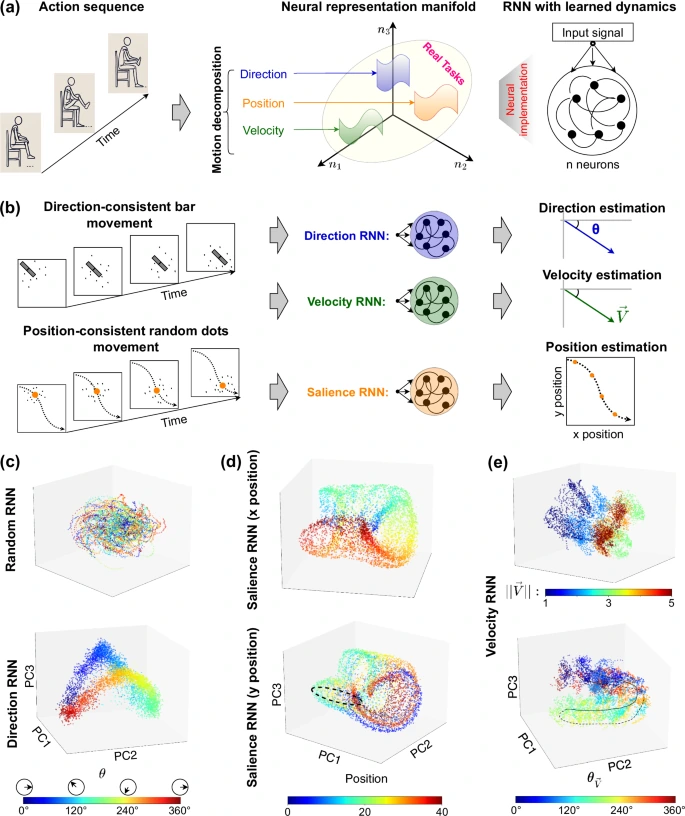
Modular recurrent networks form invariant input-driven continuous attractors that enable rapid, few-shot domain adaptation through lightweight readout adapters.
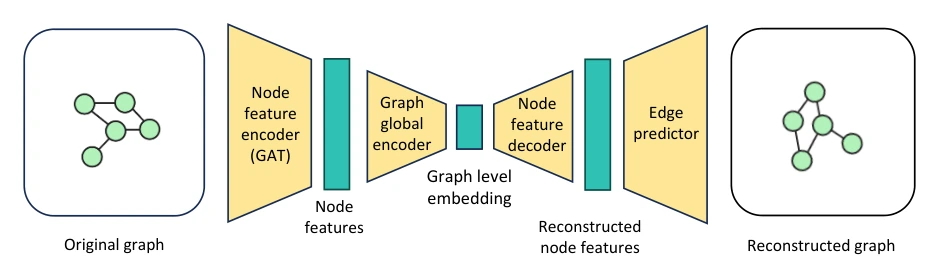
A generative latent model compresses mouse cortical microcircuit connectomes to explore structure-function relationships and synthesize bio-plausible networks.
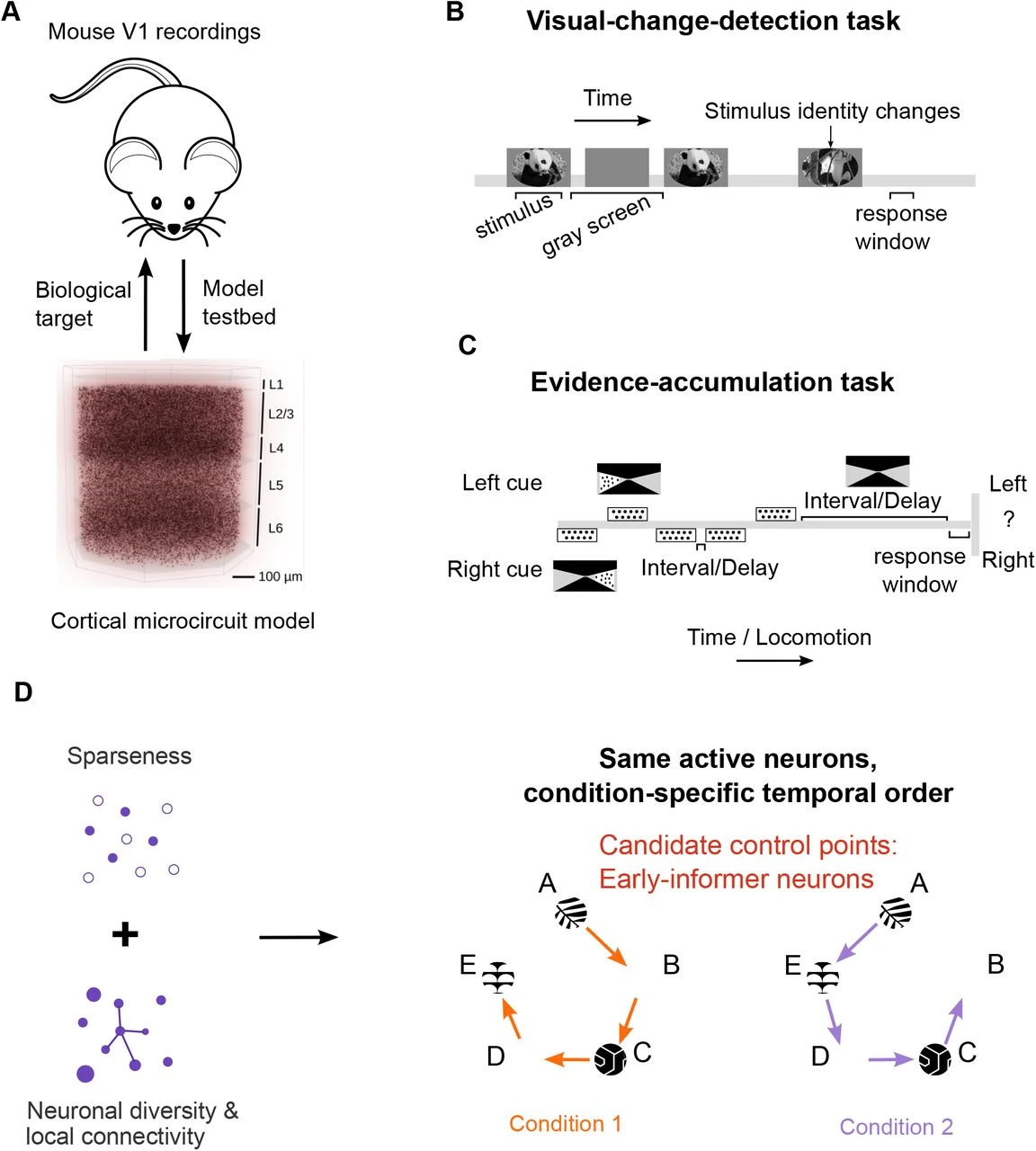
Combining mouse visual cortex recordings with a data-driven microcircuit model reveals how local connectivity and heterogeneity support flexible spike-order codes.
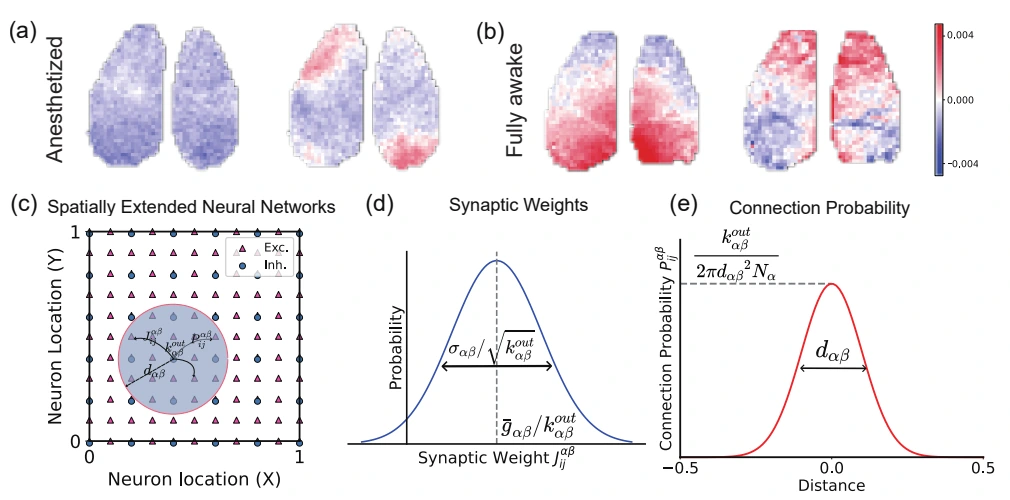
Spectral theory links microscopic excitation-inhibition connectivity rules to eigenvalue signatures that predict macroscopic cortical waves, oscillations, and chaos.
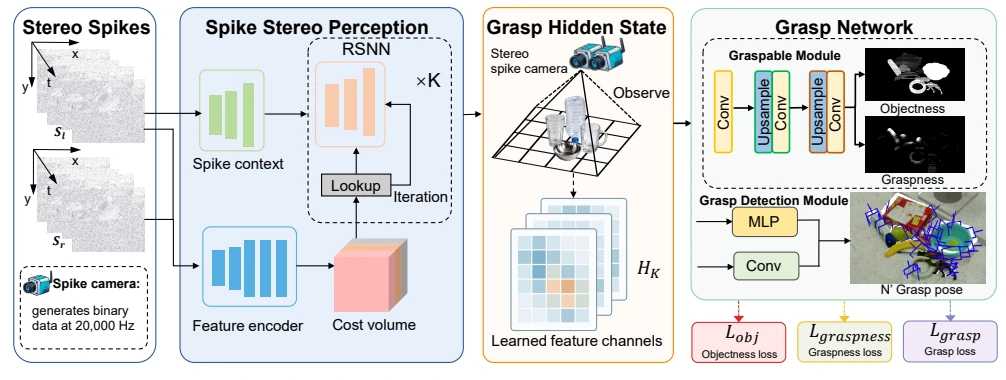
SpikeGrasp infers 6-DoF robotic grasp poses directly from stereo spike streams via recurrent spiking networks without point-cloud reconstruction.
SPKLIP aligns asynchronous spike video streams with natural language through hierarchical multiscale temporal modeling and spike-text contrastive learning.
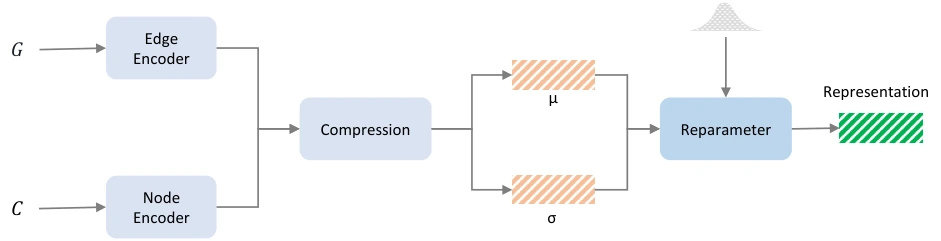
A generative representation learning framework extracts interpretable latent variables from the fruit fly connectome to steer synthetic circuit topology.
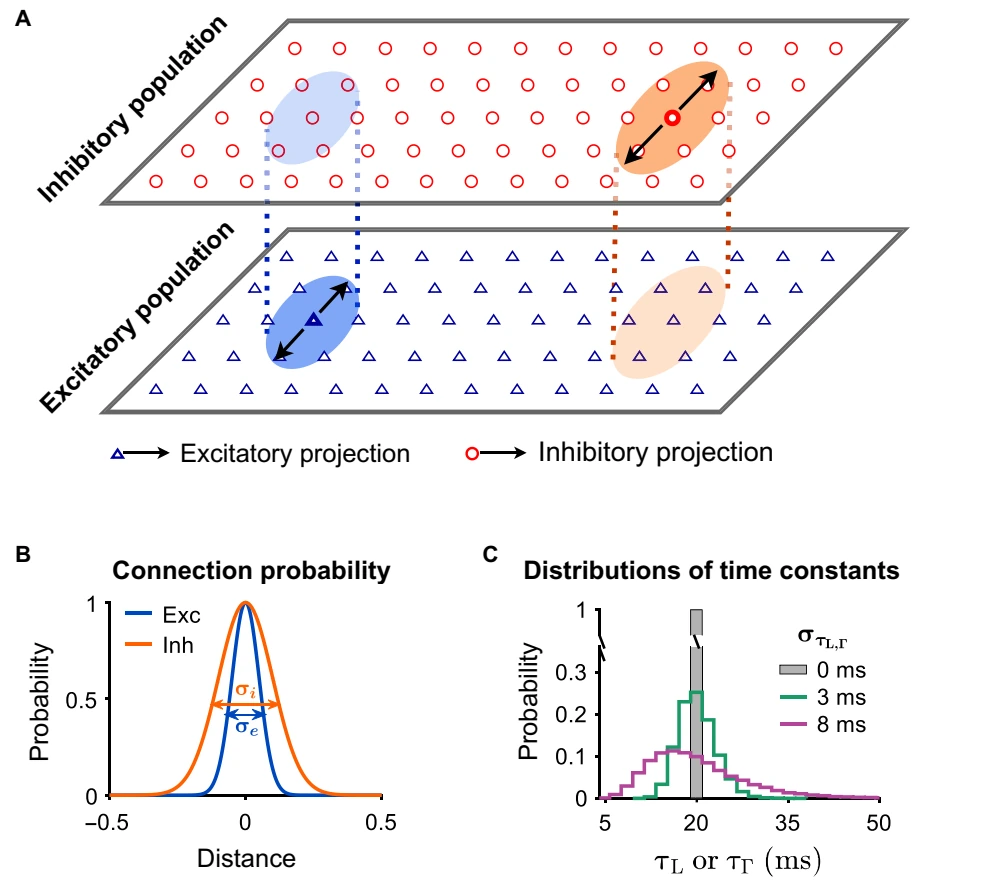
Cellular and synaptic heterogeneity disrupts intrinsic coherent waves to produce locally sensitive, globally input-slaved transient dynamics for reliable coding.
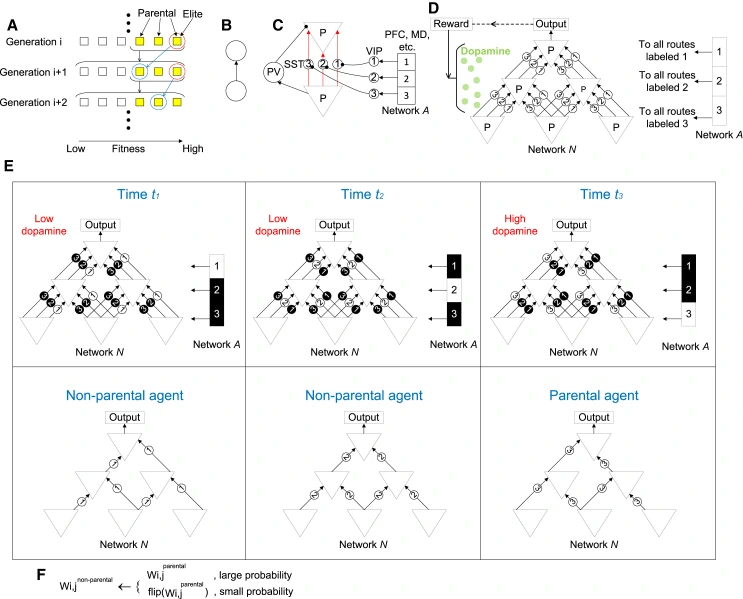
Combining evolutionary routing with dopamine-guided heterosynaptic plasticity trains biophysical spiking and analog neural networks without backpropagation.
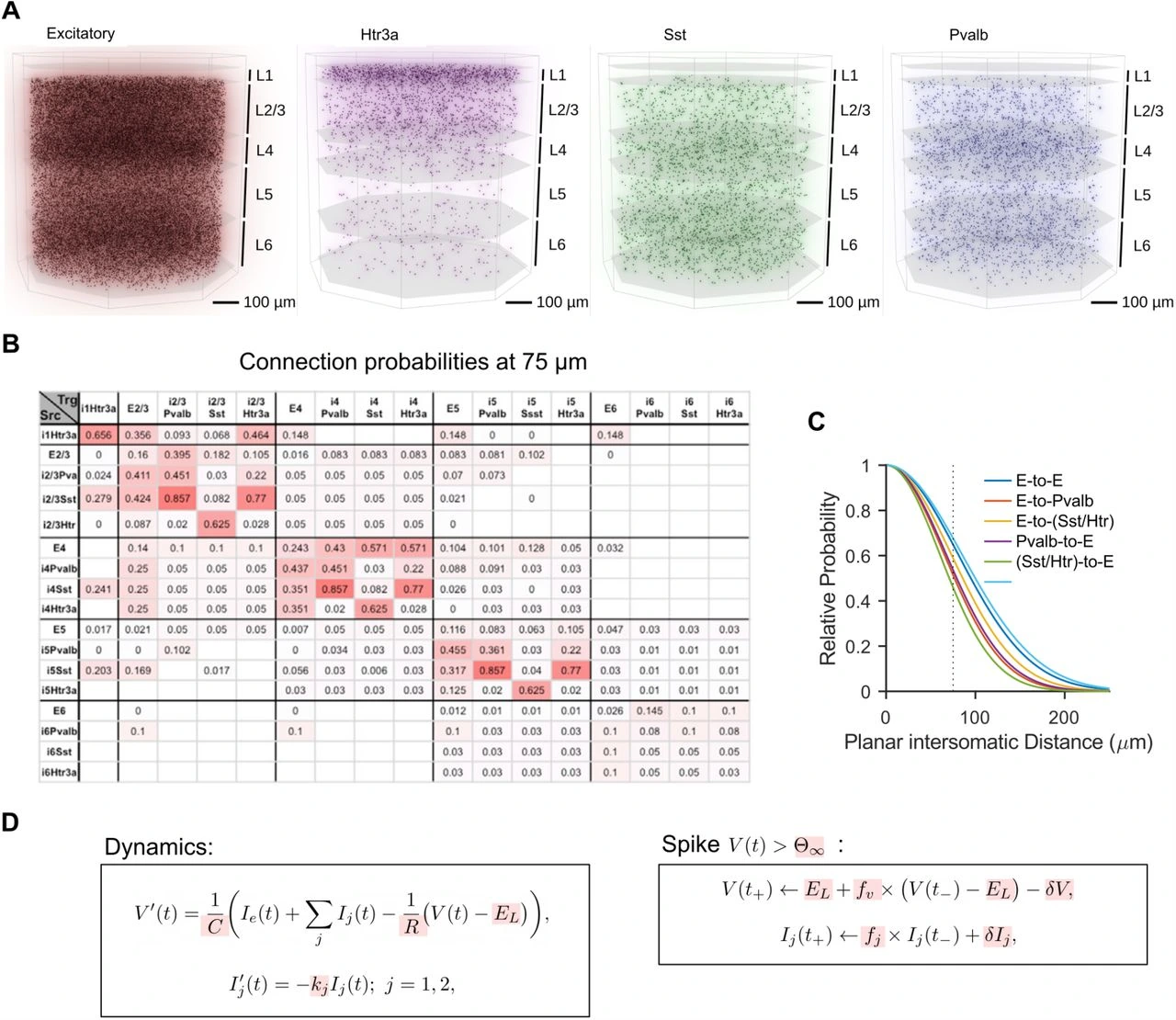
Training data-based large-scale cortical microcircuit models enables reverse-engineering of how anatomical structure organizes sparse, energy-efficient cortical computation.
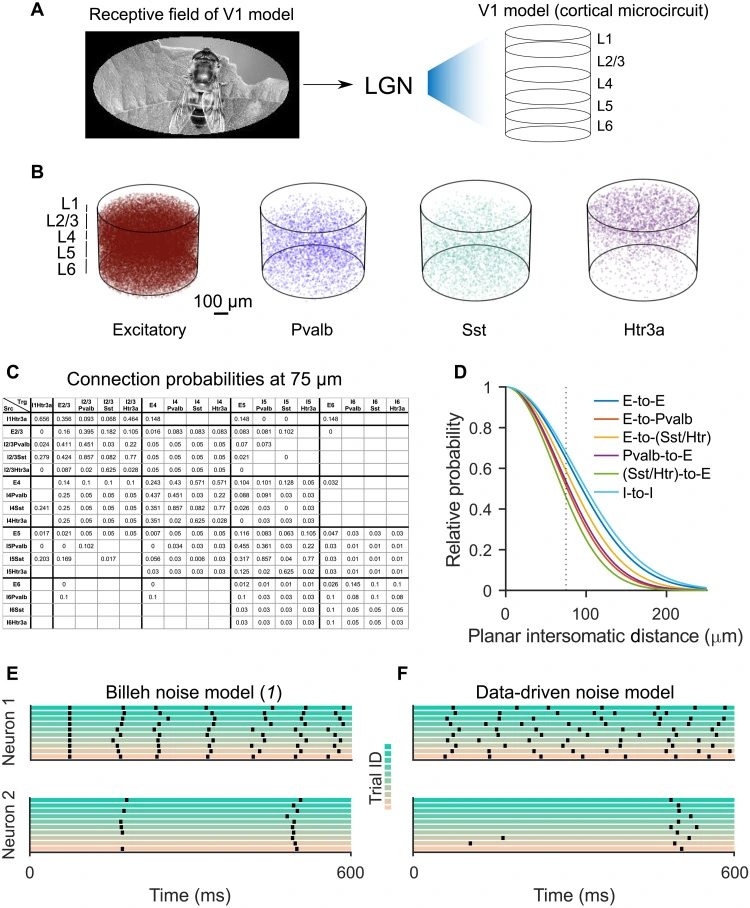
A comprehensive data-based model of primary visual cortex achieves versatile, noise-robust visual processing with sparse, energy-efficient neural coding.
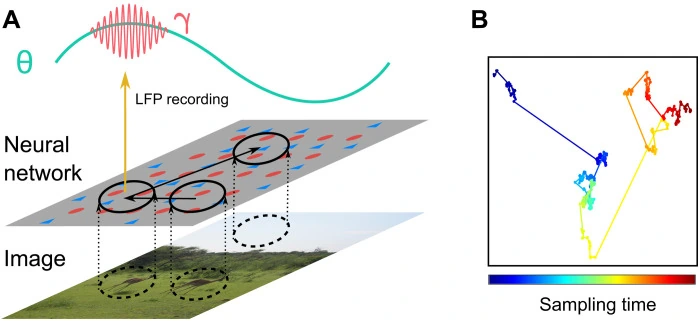
Near dynamical state transitions, cortical circuit models generate a wandering attention spotlight with theta oscillations and superdiffusive spatial sampling.
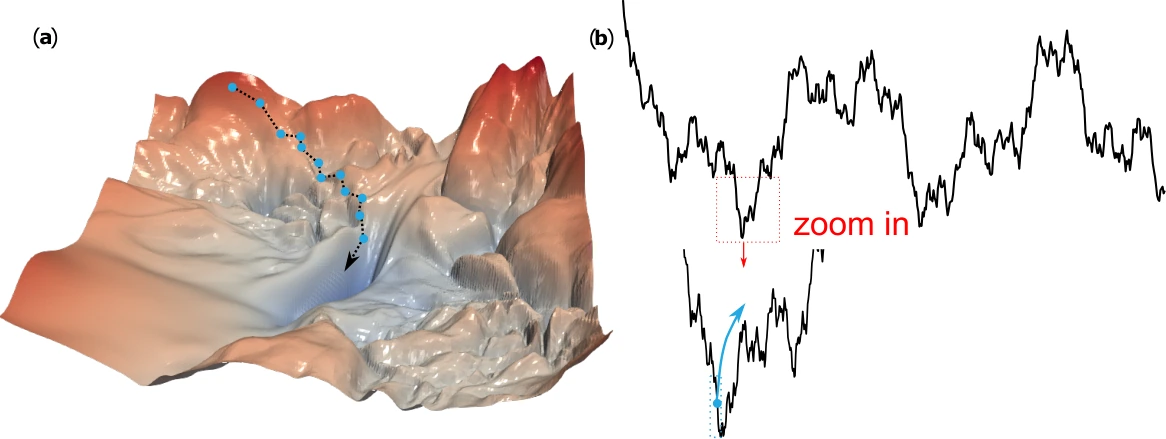
Stochastic gradient descent navigates fractal-like deep network loss landscapes through anomalous superdiffusion, enabling escape from sharp local minima.
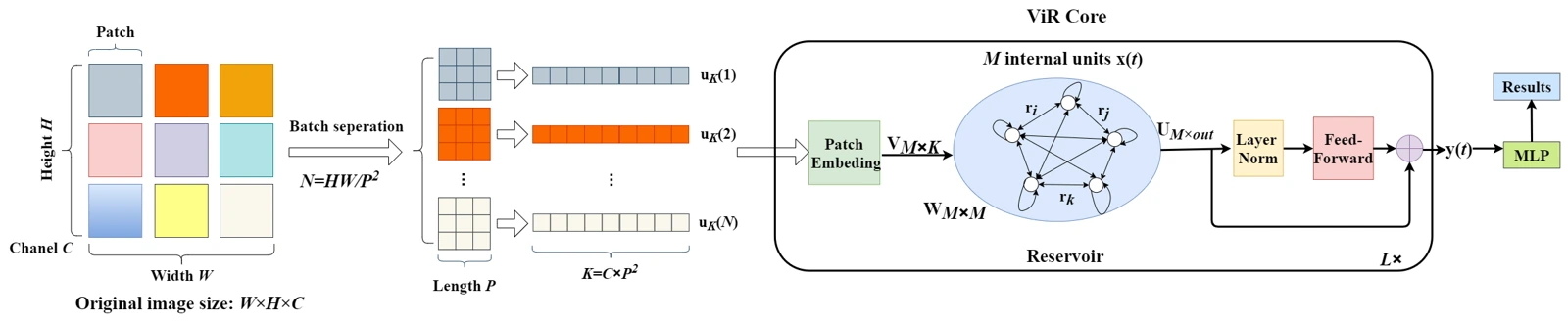
Vision Reservoir replaces trainable Transformer attention layers with fixed recurrent reservoirs to classify images efficiently without large-scale pretraining.
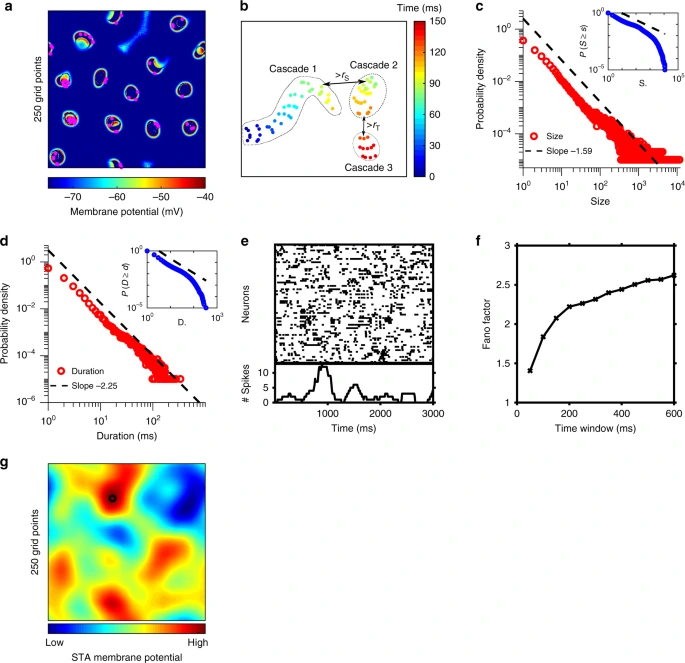
External sensory inputs compute by modulating and redistributing ongoing spontaneous cortical activity patterns, accelerating active visual processing.
This catalog contains works identified through November 5, 2026; additional publications may be listed on Google Scholar. Preprints are identified separately from peer-reviewed work; workshop papers are labeled explicitly.